The Torii
The Torii

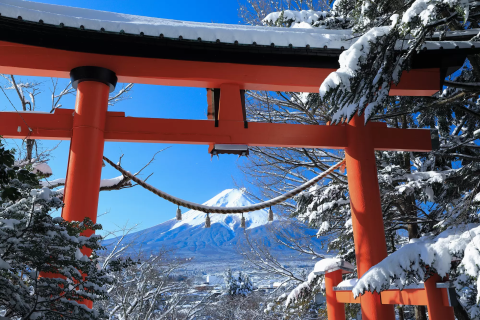
The minimalist wooden structure and the bright vermilion color immediately remind people of "Japan", simple yet powerful. It is widely present in Japanese society: whether in cities or rural areas, one needs to pass through the threshold of torii for worship, prayer, festivals, etc. Therefore, it is naturally regarded as a symbol that embodies Japanese beliefs and rituals.
History records torii as early as the Heian period. According to the Japan Shrine Headquarters, it is
“a symbolic gateway marking the transition from the secular to the sacred.”
The Shirahige Shrine by Lake Biwa in Shiga Prefecture is especially well-known for its torii standing on the lake. The torii stands above the water, blending with the natural landscape, becoming a representative image of "Japan." This landscape, where nature and religion intertwine, has been continuously replicated and disseminated.
Today it often appears in souvenirs, tourism and animation, turning into a commercial “Japanese style.”

This visibility weakens its religious meaning and sometimes brings controversy, as with the giant torii at Tokyo’s Yasukuni Shrine tied to war memory and politics.
video by South China Morning Post (YouTube, 2023)
The torii is a layered symbol. It shows Japanese aesthetics and tradition yet conceals social complexity. For me, the fridge magnet is a quiet memory, while in a wider view the torii is a threshold between surface culture and deeper realities.

评论
发表评论